







Key Takeaways
- The ComMarker B6 is ideal for conventional metal engraving and works with stainless steel, aluminum, and more.
- The ComMarker B6 MOPA offers adjustable pulse settings and color marking, suitable for advanced engraving tasks.
- When comparing ComMarker price in India, consider the specific applications you need the engraver for.
- Evaluate whether a 20W, 30W, or 60W option aligns with your production requirements before purchasing.
- Both machines support popular software and rotary engraving, enhancing workflow versatility for professional users.
Dhunikart is a leading provider of laser engraving and cutting machines in India. If you are comparing the ComMarker B6 with the ComMarker B6 MOPA, the key question is not simply which machine is more advanced, but which laser technology matches your engraving work. Buyers researching ComMarker price or ComMarker price in india should first understand the practical differences in power options, pulse control, color marking and applications before choosing a machine.
Understanding the ComMarker B6
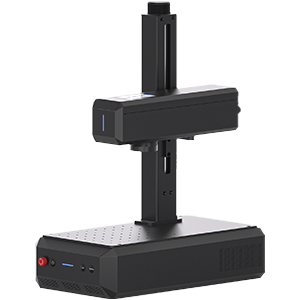
The ComMarker B6 is a compact fiber laser engraver designed for professional metal marking, engraving and selected cutting applications. According to the current product specifications on Dhunikart, it is available in 20W and 30W versions and uses a 1064 nm fiber laser.
Its standard working area is 150 × 150 mm, with an optional 200 × 200 mm working area using an optional lens. The published maximum working speed is 15,000 mm/s, while autofocus and rotary engraving support make the machine suitable for varied professional workflows.
The B6 supports materials including stainless steel, aluminium, brass, copper, gold, silver, stone, black acrylic, leather and plastic. It can therefore suit workshops, engraving businesses, jewellery applications and industrial marking work where conventional fiber-laser performance is the main requirement.
Understanding the ComMarker B6 MOPA
The ComMarker B6 JPT MOPA uses JPT MOPA fiber laser technology rather than the standard fiber laser configuration found in the B6. It is currently listed in 20W, 30W and 60W variants, giving buyers an additional higher-power option.
The major distinction is its adjustable pulse characteristics. Dhunikart lists a laser frequency range of 1–4000 kHz for the B6 MOPA, along with different pulse-width ranges depending on the selected power configuration. This technology supports applications such as color marking on stainless steel alongside conventional engraving and cutting.
For buyers comparing ComMarker price against capability, this distinction matters because the decision should be based on the type of marking your business expects to produce, rather than simply selecting one machine by name.
ComMarker B6 vs B6 MOPA: Key Differences
The clearest way to compare the two machines is by looking at the features that directly affect day-to-day engraving work.
|
Comparison |
ComMarker B6 |
ComMarker B6 MOPA |
|
Laser technology |
Fiber Laser |
JPT MOPA Fiber Laser |
|
Power options |
20W / 30W |
20W / 30W / 60W |
|
Wavelength |
1064 nm |
1064 nm |
|
Standard working area |
150 × 150 mm |
150 × 150 mm |
|
Maximum working speed |
Up to 15,000 mm/s |
Up to 15,000 mm/s |
|
Color marking |
Not listed as a processing mode |
Supported |
These specifications show that both machines share several core characteristics, but MOPA technology expands the B6 MOPA’s processing flexibility, particularly for controlled pulse applications and color marking.
When Does the Standard B6 Make More Sense?
The standard B6 can be a practical choice when your main work involves logos, serial numbers, QR codes, identification marks, jewellery engraving and general metal engraving without a specific requirement for MOPA pulse control or stainless-steel color marking.
It might be appropriate for companies that deal with:
- Stainless steel and aluminium products
- Brass and copper components
- Gold and silver jewellery
- Industrial identification and marking
- Plastic, leather and black acrylic applications
If these applications cover most of your expected workload, comparing the ComMarker price in india should involve the B6 configuration, required power level, working area and accessories rather than focusing only on the MOPA model.
When Is the B6 MOPA the Better Fit for Your Application?
The B6 MOPA becomes more relevant when your workflow requires greater pulse-control flexibility or color marking on stainless steel. Dhunikart specifically lists laser engraving, laser cutting and color marking among its processing modes.
The 60W option can also matter for users whose production requirements extend beyond the 20W and 30W choices available with the standard B6. Its published material compatibility includes stainless steel, aluminium, brass, copper, gold, silver, stone, black acrylic, leather and plastic.
The main reason to move from the standard B6 to the B6 MOPA is the need for MOPA-specific processing flexibility, not simply because one model sits higher in the product range.
Software and Workflow Compatibility
Both machines are listed as compatible with EZCAD and LightBurn. They support Windows and macOS environments through USB connectivity, giving professional users familiar software options for preparing engraving jobs.
Both also support rotary engraving, which is useful when working with cylindrical or curved objects using an appropriate rotary setup. This makes either platform relevant for businesses that want to expand beyond flat engraving jobs.
When evaluating ComMarker price, buyers should therefore consider not only the laser source but also the complete setup they need, including the required power configuration, lens, rotary capability and safety setup.
What Should You Check Before Choosing?
Before selecting either machine, match the specification to the products you actually intend to engrave.
- Identify the materials you will process most frequently.
- Decide whether stainless-steel color marking is required.
- Choose between 20W, 30W or the additional 60W MOPA option.
- Confirm whether the standard 150 × 150 mm work area suits your jobs.
- Determine whether rotary engraving will form part of your workflow.
- Check whether your work requires conventional fiber engraving or adjustable MOPA pulse characteristics.
This evaluation gives much more useful context when researching ComMarker price in india because two businesses can require very different machine configurations even when both are purchasing a ComMarker B6-series engraver.
B6 or B6 MOPA for Professional Buyers?
For straightforward professional fiber engraving, the B6 provides 20W and 30W options with high-speed processing, autofocus, rotary support and compatibility with common metals and selected non-metal materials.
For users who need color marking on stainless steel, wider laser-frequency control or a 60W configuration, the B6 MOPA provides those additional capabilities.
Businesses comparing ComMarker price and ComMarker price in india should therefore treat the machine’s intended application as the starting point. A model that matches your actual production requirements is more relevant than choosing based only on specifications you may never use.
Why Choose Us
At Dhunikart, we help buyers evaluate laser machines according to their materials, engraving applications and production requirements. Our ComMarker range includes B Series machines such as the B6 and B6 JPT MOPA, along with configurations designed for different professional workflows. Buyers can also request a personalized product demo and discuss the suitable machine setup with our team before placing an order. This approach helps businesses select equipment around real engraving needs rather than specifications alone.
Conclusion
The ComMarker B6 and B6 MOPA are both professional 1064 nm fiber-laser platforms, but they address different levels of processing flexibility. The standard B6 is suited to conventional metal engraving, marking and selected cutting applications with 20W or 30W options. The B6 MOPA adds JPT MOPA technology, color marking capability and a 60W option. For buyers evaluating ComMarker price in india, the right decision comes down to materials, required marking effects, power requirements and production workflow. Dhunikart can help you compare these factors before selecting the suitable configuration.
Looking to buy a ComMarker B6 or B6 MOPA for your engraving business? Contact Dhunikart to discuss your materials, applications and required laser configuration before ordering.
Call: +91 8866664329
Email: support@dhunikart.in
Speak with our team today to find the ComMarker configuration suited to your professional engraving requirements.
Frequently Asked Questions
What is the ComMarker price in India for the B6 and B6 MOPA models?
The ComMarker B6 is offered in 20W and 30W versions, while the B6 MOPA is available in 20W, 30W, and 60W. Prices can vary based on specifications and options, so it’s advisable to check with Dhunikart for the most accurate pricing information.
How do the features of the ComMarker B6 compare to the B6 MOPA?
The ComMarker B6 is a standard fiber laser used primarily for engraving and marking, while the B6 MOPA utilizes JPT MOPA technology, offering enhanced pulse control and the ability to perform color marking. These differences make the B6 more suitable for general applications and the B6 MOPA better for specialized tasks.
Which ComMarker model is better for color marking applications?
The ComMarker B6 MOPA is the clear choice for color marking, as it supports various pulse-width ranges and adjustable laser frequencies specifically for this purpose. In contrast, the standard B6 does not have color marking capabilities.
What materials can be engraved with the ComMarker B6 and B6 MOPA?
Both models can engrave a variety of materials, including stainless steel, aluminum, brass, copper, gold, silver, stone, black acrylic, leather, and plastic. The choice of model typically depends on the specific engraving requirements of your projects.
When might a user prefer the ComMarker B6 over the B6 MOPA?
A user might prefer the ComMarker B6 when their primary tasks involve straightforward engraving and marking, such as logos and serial numbers, without the need for advanced pulse control or color marking. This makes the B6 a practical and effective choice for conventional applications.